For most industrial OEMs, spare parts data goes back decades. It supports machines that are still running, but it was created in systems never designed for modern aftermarket operations. This is what makes it “legacy”: not its age, but the way it is stored and managed.
How legacy data is typically handled
Legacy spare parts data often lives across ERP systems, old PLM exports, spreadsheets, PDFs, and custom databases. These setups were built for engineering and production, not service and parts operations. As a result, they struggle with configurations, part changes, and long-term support needs. The impact is manual work, inconsistent information, and a higher risk of errors.
Migrating without losing history
When companies modernise their aftermarket systems, legacy data is the hardest part to move. Migration means more than transferring files — it requires restructuring relationships between parts, machines, and documents, while keeping historical accuracy. Instead of aiming for perfect data upfront, many organisations succeed by migrating what exists and improving it gradually in daily operations.
Making legacy data usable
Legacy data does not need to become “modern” product data. It needs to become manageable. That means storing it in systems built for spare parts, linking it to real machines and serial numbers, handling supersessions, and assigning clear ownership. At the same time, its historical nature must be recognised: some gaps and uncertainties will remain.
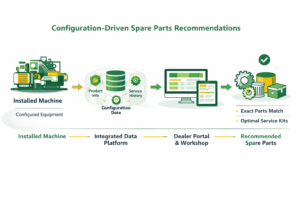
This is exactly where purpose-built aftermarket data platforms come into play. At Signifikant, we work specifically with legacy spare parts data — helping OEMs structure, maintain, and expose historical parts information so it can be used reliably in service, support, and customer-facing processes.
Why it still matters
Legacy spare parts data directly affects uptime, service costs, and customer trust. Poor data leads to wrong orders and downtime. Well-managed data improves first-time-fix rates, supports better stocking decisions, and extends equipment life. In this way, legacy data continues to shape future profitability.
Managing the legacy
Legacy spare parts data is not something to escape. It must be controlled. It is not always necessary to move legacy data into the main aftermarket PIM; in some cases, it is enough to place it in a system where it can be maintained and made accessible. The goal is not to replace legacy data, but to move it into maintainable environments, govern it deliberately, and improve it over time. When managed this way, legacy data becomes a foundation for reliable service and long-term aftermarket revenue.