


Product Information Management for an Efficient Aftermarket

Breaking Down Content Silos with Case-Based Workflow

What is an Aftermarket PIM?

Aftermarket PIM manages the needs of aftermarket sales and services, whereas a classic PIM focuses on finished goods. Aftermarket data management and its complexities related to spare parts, aftermarket sales and service information are managed using a streamlined Aftermarket PIM system

This specialised and efficient aftermarket PIM consolidates aftermarket data from various sources into a unified repository, including spare parts catalogue, exploded views, service bulletins, and catalogue documentation.

It facilitates creating, managing, and distributing spare parts catalogues, service kits, replacement chains, and other aftermarket-related content.

This assures field teams and customers of the most accurate and up-to-date product information on aftermarket sales, services and eCommerce.

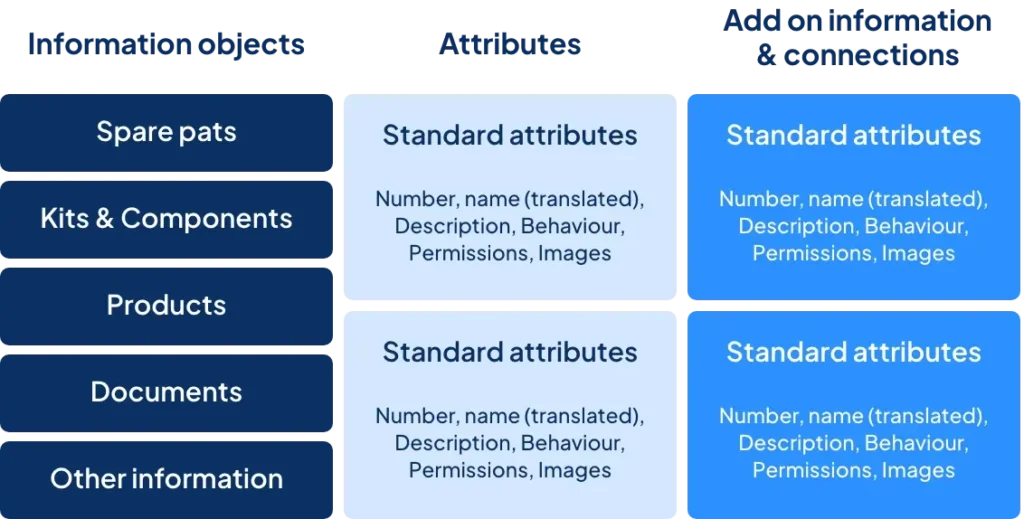
Product information management structure showing spare parts, kits, products, documents, and standard attributes

Say goodbye to information overload and get personalised aftermarket content with Signifikant’s innovative approach.

Warehouse worker scanning industrial parts inventory using tablet in product information system

When Would You Need Signifikant’s PIM System?

Signifikant Aftermarket PIM Toolset

Wrench Icon

Handle legacy parts and their replacements.

Tag Icon

Store the connection between the ordered part and the product.

Share Icon

Self registration or other means to connect products to its owner.

Product Box Icon

Finding the exact right product version.

Scan Icon

Keep track of customers products and install base

Search Icon

Track purchases and modifications, and ensure connection to right product or model

Book Icon

Documentation, manuals, bulletins, support.

Graph Icon

Aftermarket specific cross-sales and up-sales strategies.

Storage Icon

Serial numbers, products versions and the spare parts, documentation, accessories for that one.
Product Information Management for Aftermarket

In business, efficient task performance depends on relevant information. With large volumes of aftermarket data, companies need to deliver service information based on roles, skills, tasks, and locations.

Signifikant’s three-step approach—consolidation, tagging, and filtering—transforms content silos into case-based workflows, including catalogue integration. It helps deliver personalised aftermarket service and product information, reducing downtime and improving spare parts PIM solution for aftermarket sales and eCommerce.

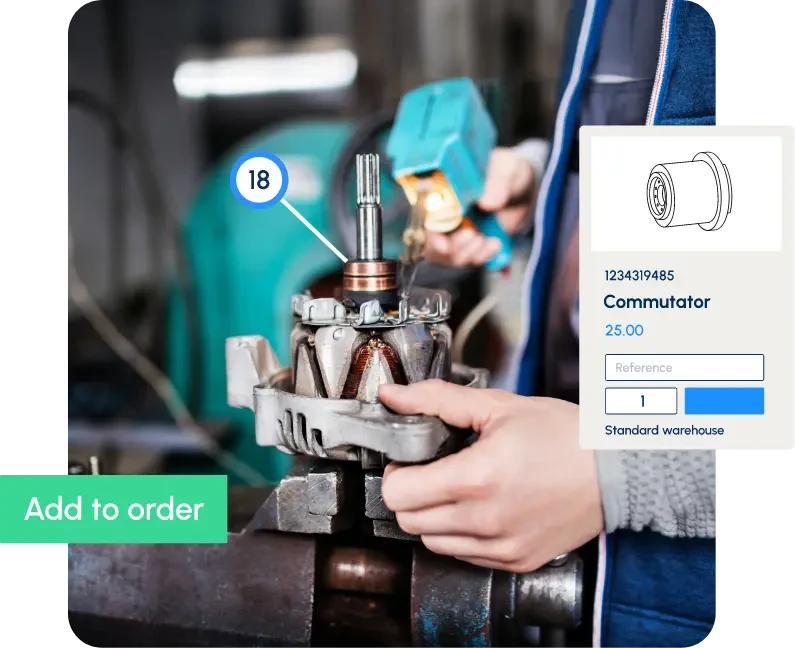
Technician identifying commutator part with price and add to order interface in aftermarket platform

Signifikant Aftermarket Platform Toolset

Tracking Icon

Step 1: Consolidation

Service information is often stored in various tools with different technologies, structures, and terminologies. Signifikant consolidates this aftermarket data into a unified aftermarket database while preserving each tool’s unique features.

This ensures that product information from each tool is imported, mapped, and synchronised regularly to maintain a consistent and up-to-date aftermarket data set for eCommerce.

Tag Icon

Step 2: Tagging

All service information, from small text fragments to complete catalogues or information types, is tagged for multiple purposes.

Tags determine the machines for which the catalogue product information is valid, such as serial numbers, production dates, or machine characteristics. Tags also identify the users for whom the product information is relevant, considering their roles, language preferences, and skill levels,including those involved in eCommerce transactions.

Filter Icon

Step 3: Filtering

Information is filtered based on the user’s role, language, skill level, partnership type, agreements, subscriptions, customer machines, and tasks. This ensures relevant, reliable aftermarket product information for users, without searching in multiple catalogues. Signifikant optimises aftermarket data for eCommerce and aftermarket sales, enabling service organisations to manage equipment maintenance and spare parts efficiently while minimising disruptions to business operations.

Key Terms Explained